

How to Select a Bearing for an Electric Motor (2026)
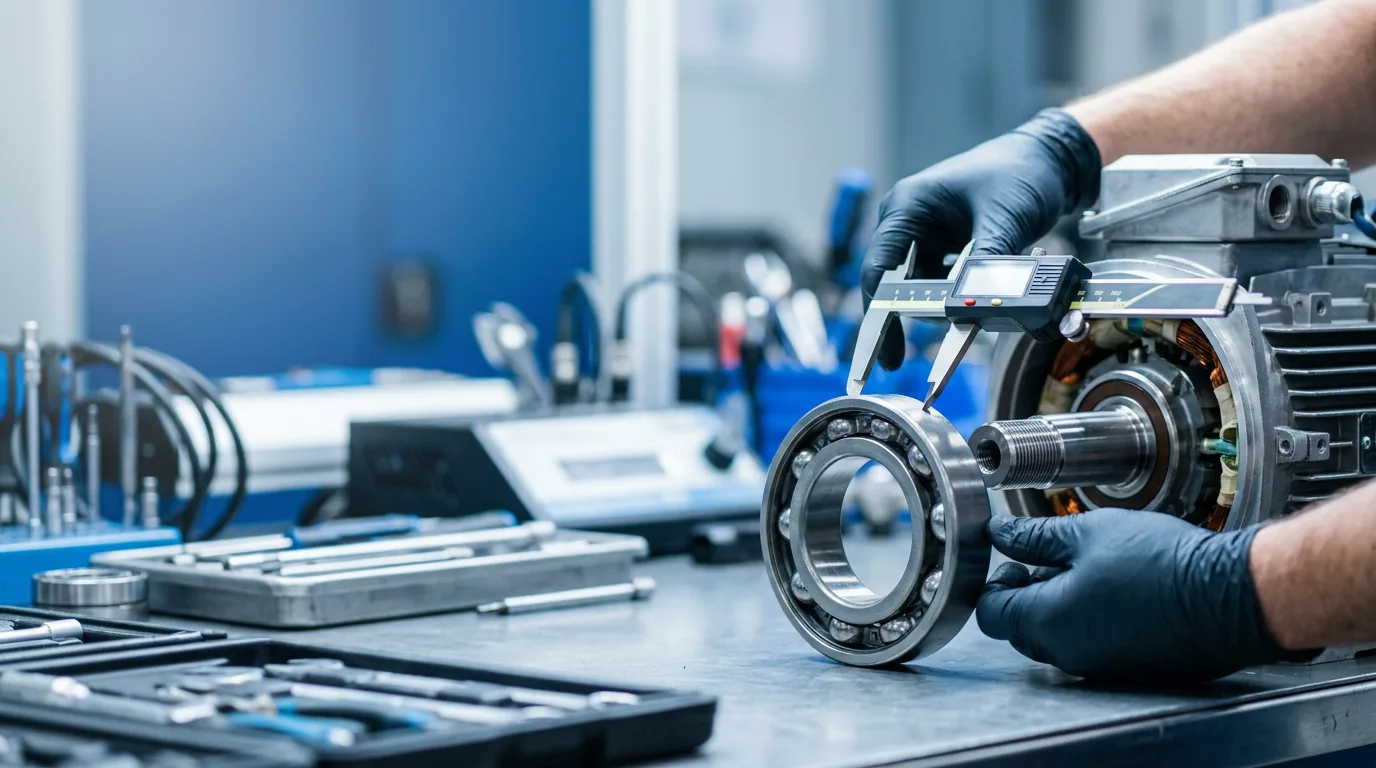
Selecting the correct bearing for an electric motor requires matching the bearing's internal geometry to the motor's operating RPM, radial load, and acoustic requirements. Electric motors require specific high-speed bearings - typically deep groove ball bearings or cylindrical roller bearings - to handle rapid RPMs while minimizing friction and heat generation.
Using the wrong bearing configuration leads to rapid heat buildup, increased vibration, and catastrophic motor failure. Deep groove ball bearings excel in high-speed electric motors with light to moderate loads, offering versatile performance and lower noise levels than roller alternatives. Conversely, cylindrical roller bearings are selected for electric motors that must support heavy radial loads, though they have lower maximum speed limits than ball bearings. This guide explains how to choose a bearing for high-speed applications, compares ball vs roller bearing performance, and outlines exactly how to diagnose bearing noise causes before a failure halts production.
How do I choose the right bearing for an electric motor?
Choosing the right bearing for an electric motor comes down to evaluating the motor's operating speed against the radial load it must support. Electric motors require specific high-speed bearings - typically deep groove ball bearings or cylindrical roller bearings - to handle rapid RPMs while minimizing friction and heat generation.
Selecting the wrong bearing configuration leads to rapid heat buildup, increased vibration, and catastrophic motor failure. High-speed motors operating at 3,000 to 3,600 RPM require bearings designed to minimize rolling friction[1]. In these applications, the internal clearance, cage design, and contact geometry play a critical role in maintaining motor efficiency. Maintenance engineers must balance the need for high-speed operation with the mechanical demands of the driven equipment.
For example, a direct-drive fan motor has vastly different bearing requirements than a heavy-duty belt-driven motor. Deep groove ball bearings are the standard choice for most AC motors because they accommodate high speeds and run quietly[2]. However, if the motor shaft is subjected to heavy side loads from a pulley or gear, a cylindrical roller bearing is required on the drive end to prevent premature wear. If you need assistance determining the exact specifications for your machinery, consulting a bearing selection guide can help prevent costly downtime. Our team routinely assists plant managers in evaluating load dynamics to specify the exact bearing series that will maximize motor lifespan.
What is the difference between ball and roller bearings in high-speed motors?
The primary difference between ball and roller bearings in high-speed motors is their contact geometry: ball bearings use point contact for high speeds and low friction, while cylindrical roller bearings use line contact to support heavier radial loads. Deep groove ball bearings excel in high-speed electric motors with light to moderate loads, offering versatile performance and lower noise levels than roller alternatives.
Cylindrical roller bearings are selected for electric motors that must support heavy radial loads, though they have lower maximum speed limits than ball bearings. The structural difference directly dictates performance limits. Because a ball bearing relies on a spherical rolling element, the contact area with the raceway is a tiny point. This dramatically reduces rolling resistance and heat generation[3]. For example, a standard 25mm bore deep groove ball bearing can reach speeds of approximately 30,000 RPM under oil lubrication, whereas a similarly sized cylindrical roller bearing tops out around 12,000 RPM[4].
Conversely, when having bearing load capacity explained, engineers note that the line contact of a cylindrical roller spreads the load over a larger surface area, providing immense radial stiffness[5]. This makes them indispensable for motors driving heavy industrial loads, but the increased friction means they cannot match the RPM capabilities of a ball bearing.
| Feature | Deep Groove Ball Bearings | Cylindrical Roller Bearings |
|---|---|---|
| Contact Geometry | Point contact[3] | Line contact[6] |
| Speed Limit | Very high (approx. 2.5x faster)[4] | Moderate[4] |
| Radial Load Capacity | Light to moderate | Heavy[5] |
| Noise Profile | Low (Quiet)[6] | Moderate[6] |
How can I prevent premature bearing failure in high-speed motors?
To prevent premature bearing failure in high-speed motors, maintenance teams must implement strict lubrication protocols, verify precise shaft alignment, and conduct regular vibration monitoring. Improper lubrication causes 20 to 40 percent of premature bearing failures in electric motors, making precise grease selection critical for high-speed applications. In fact, major bearing manufacturers attribute 36% of premature bearing failures specifically to lubrication issues[7].
Following a strict relubrication schedule based on operating temperature and RPM prevents metal-on-metal contact and overheating. When an electric motor operates at high speeds, the lubricant must maintain a microscopic film between the rolling elements and the raceway. If this film breaks down due to incorrect viscosity, contamination, or thermal degradation, friction spikes instantly. Implementing a comprehensive bearing maintenance program extends equipment life through the following steps:
- Select the correct grease: Choose a lubricant with the appropriate base oil viscosity for the motor's operating speed and temperature[8]. Mixing incompatible thickeners will cause the grease to separate and fail.
- Calculate exact grease volume: Prevent over-lubrication, which causes churning, excessive heat generation, and blown motor seals[9].
- Establish a condition-based relubrication interval: Base the regreasing schedule on the bearing type, physical size, and actual motor RPM, rather than a generic calendar date.
- Monitor vibration levels: Use vibration analysis to detect early signs of subsurface fatigue or micro-misalignment before catastrophic failure occurs.
- Maintain strict cleanliness: Prevent dust and moisture ingress during regreasing. Contamination rapidly accelerates wear and destroys the internal geometry of high-speed bearings[7].
Why is my electric motor bearing noisy?
Electric motor bearings become noisy when they suffer from lubrication starvation, contamination, internal damage, or shaft misalignment. Excessive bearing noise is typically the first physical indicator of lubrication starvation, contamination, or shaft misalignment.
Identifying the specific type of noise - such as high-pitched squealing versus low-frequency rumbling - helps isolate the root cause. Deep groove ball bearings are engineered for exceptionally quiet running in motor applications[2]. Therefore, any audible change indicates a developing bearing failure. Maintenance engineers should never ignore a noisy motor or attempt to fix it simply by pumping in more grease without diagnosing the underlying issue. Evaluate the noise against these diagnostic criteria to determine the correct corrective action:
| Noise Characteristic | Probable Cause | Required Action |
|---|---|---|
| High-pitched squealing | Lubrication starvation or incorrect grease viscosity | Verify the grease type and replenish to the calculated volume. |
| Harsh, grinding rumble | Solid contamination or raceway spalling | Remove the motor from service and replace the bearing immediately. |
| Rhythmic clicking | Localized damage to a rolling element or raceway | Inspect for fatigue flaking and schedule a planned bearing replacement. |
| Low-frequency hum or vibration | Shaft misalignment or rotor unbalance | Realign the motor shaft to the driven equipment using precision laser alignment tools. |
By catching these acoustic warning signs early, our team has helped countless plant managers prevent sudden catastrophic breakdowns and costly unplanned downtime.
Frequently Asked Questions
How do I choose the right bearing for an electric motor?
Choose the right bearing by matching the motor's operating RPM and load requirements to the bearing's design. Deep groove ball bearings are ideal for high-speed, light-load applications, while cylindrical roller bearings are required for heavy radial loads in belt-driven or gear-driven motors.
What is the difference between ball and roller bearings?
Ball bearings use point contact, which minimizes friction and allows for very high speeds and quiet operation. Roller bearings use line contact, which provides a much higher radial load capacity but limits their maximum speed and generates more noise.
Why is my electric motor bearing noisy?
An electric motor bearing is typically noisy due to a lack of lubrication, contamination in the grease, or physical damage to the raceways. High-pitched squealing often indicates dry running, while a harsh grinding noise signals contamination or metal fatigue.
How can I prevent premature bearing failure in high-speed motors?
Prevent premature failure by applying the correct volume and type of grease at specified intervals, ensuring precise shaft alignment, and keeping the operating environment clean. Improper lubrication is the root cause of over one-third of all premature bearing failures.
References
- [PDF] Rolling bearings and seals in electric motors and generators - SKF. https://cdn.skfmediahub.skf.com/api/public/0901d196802b0348/pdf_preview_medium/13459_EN_Rolling_bearings_and_seals_in_electric_motors_and_generators_pdf_preview_medium.pdf (2026-06-17)
- [PDF] Rolling bearings in electric motors and generators. https://help.bdsbearing.com/hubfs/Knowledge%20Base/SKF/SKF%20Rolling%20Bearings%20in%20Electric%20Motors%20and%20Generators.pdf (2026-06-25)
- Advantages of Deep Groove Ball Bearings Over Other Bearing Types. https://blog.nskamericas.com/advantages-of-deep-groove-ball-bearings-over-other-bearing-types (2024-05-02)
- Roller Bearings vs. Ball Bearings: What's the Difference?. https://pibsales.com/bearings/roller-bearings-vs-ball-bearings/ (2026-03-05)
- The Difference Between Ball Bearings and Roller Bearings. https://www.qualitybearingsonline.com/blog/the-difference-between-ball-bearings-and-roller-bearings/ (2024-08-30)
- Cylindrical Roller Bearings vs. Ball Bearings - TFL Bearing. https://tflbearing.com/blog/cylindrical-roller-bearings-vs-ball-bearings.html (2024-12-30)
- Bearing Failure Cause Statistics: What the Numbers Show - Reliable. https://reliamag.com/guides/bearing-failure-cause-statistics/ (2026-06-11)
- Common Preventable Electric Motor Failures: Bearings - HECO Inc.. https://hecoinc.com/common-preventable-electric-motor-failures-bearings/ (2018-01-04)
- Do bearings really fail from over greasing?. https://www.machineryanalysis.org/post/do-bearings-really-fail-from-over-greasing-10188938 (2019-07-13)