

Why Is My Industrial Bearing Making Noise? (2026 Guide)
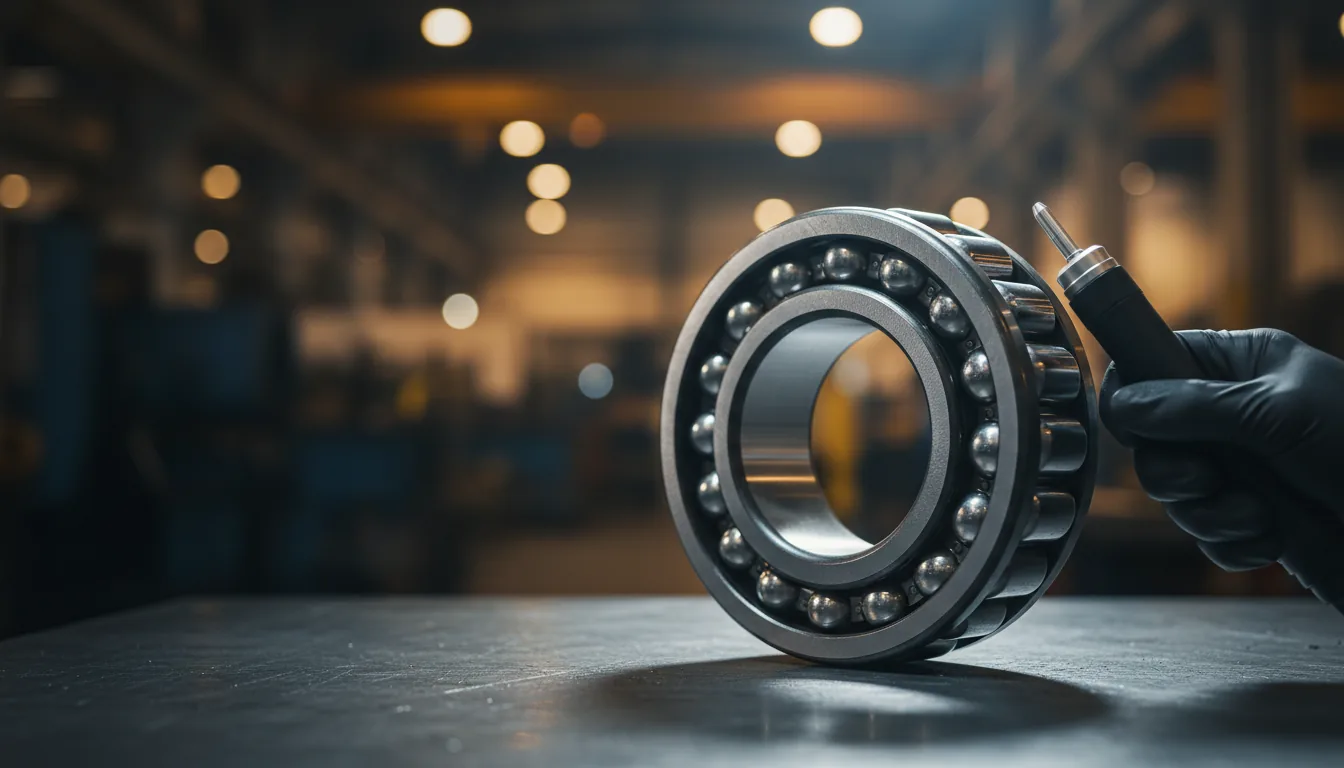
Industrial bearing noise indicates abnormal friction, which is typically caused by contamination, poor lubrication, or shaft misalignment. When machinery in your Jakarta plant or local workshop starts producing unusual sounds, it is a direct warning that the rolling elements or raceways are compromised. Ignoring these acoustic signals leads directly to premature bearing failure and expensive machine downtime.
Diagnosing the exact noise - whether it is a high-pitched whine, a harsh grind, or a steady rattle - allows technicians to intervene early. Replacing failing parts with quiet, low-maintenance, and reliable HI-TEC ASIA bearings prevents unexpected breakdowns and reduces long-term operational costs. This guide breaks down what specific bearing noises mean and how to determine whether your equipment requires immediate re-greasing or a complete bearing replacement.
What does a failing industrial bearing sound like?
A failing industrial bearing produces distinct sounds that map directly to specific mechanical failures, with high-pitched whining indicating lubrication issues, harsh grinding pointing to contamination, and rattling signaling physical raceway damage[1][2][3]. Diagnosing these sounds accurately allows plant engineers to take immediate corrective action before catastrophic failure occurs.
A high-pitched whining noise most often points to inadequate lubrication, degraded grease, excessive preload, or electrical erosion in motor applications[1][4][5]. To resolve a whine, you should verify the lubricant type, check the shaft fit, and relubricate if appropriate[1][4].
A harsh grinding noise usually indicates severe contamination by dirt or metal particles, lack of lubrication causing metal-on-metal contact, or advanced bearing spalling[2][6][7]. Grinding is a sign of direct internal contact and progressing damage[8][2]. If your machine produces this noise, stop the equipment immediately, inspect the surrounding seals, and replace the bearing if the raceways are damaged[9][10].
A rattling noise commonly suggests loose or damaged cage components, raceway pitting, or excessive internal clearance[11][12][3]. Rattling occurs when damaged raceways cause rolling elements to bounce or chatter during rotation[12][3].
| Bearing Noise | Most Likely Causes | Recommended Action |
|---|---|---|
| High-pitched whining | Insufficient lubrication, excessive preload, or electrical erosion[1][4] | Verify lubricant quantity, check shaft fit, and re-grease[1][5] |
| Harsh grinding | Contamination (dirt/metal), severe lubrication failure, advanced spalling[2][7] | Stop machine immediately, clean components, and replace bearing[9][10] |
| Rattling or chattering | Raceway pitting, loose cage components, excessive clearance[12][3] | Inspect for physical damage and replace if pitting is confirmed[9][3] |
By following the diagnostic rule - whine means check lubrication, grind means treat as contamination, and rattle means suspect surface damage - workshop mechanics can prevent extensive machinery damage[1][2][10]. If you catch these signs of industrial bearing failure early, you save significant repair costs.
Can a noisy industrial bearing be repaired or must it be replaced?
While minor lubrication issues can sometimes be resolved with immediate re-greasing, physical damage like grinding or rattling requires immediate replacement to prevent catastrophic machine downtime. A noisy bearing can only be saved by re-greasing if the noise is caused by lubrication starvation and there is absolutely no evidence of structural damage[13][14].
Re-greasing is the correct action when inspection reveals dry or insufficient grease, but the bearing surfaces remain completely intact[13][15]. If the noise improves and the operating temperature drops after proper lubrication, the bearing was likely starved for grease rather than structurally compromised[16]. However, guides note that if the existing grease is dark, separated, or mildly contaminated, technicians must clean the bearing thoroughly before regreasing[13][17].
Immediate replacement is mandatory when inspection shows any physical fatigue or damage. Bearings cannot be reused if they exhibit spalling or flaking on the raceway, brinelling from heavy impacts, cracks, scoring, or cage damage[18][14]. Heat damage, such as discoloration or bluing, also triggers an immediate replacement requirement[18][19]. Furthermore, if purged grease contains metal particles, this indicates active wear and internal material loss, meaning lubrication will no longer solve the problem[20][21].
When physical damage makes replacement unavoidable, exploring the HI-TEC ASIA bearings catalog is essential. Our standard HI-TEC line delivers dependable performance for everyday workshop applications, while HI-TEC SILVER provides premium materials for demanding industrial loads. Replacing compromised components with quiet, low-maintenance, and reliable HI-TEC ASIA bearings eliminates the false economy of cheap alternatives. By choosing precision-engineered bearings, Indonesian manufacturing plants and automotive workshops reduce friction, lower operating temperatures, and significantly extend the time between maintenance intervals.
Frequently Asked Questions
Why is my industrial bearing making a grinding noise?
A harsh grinding noise indicates severe contamination by dirt or metal particles, or advanced fatigue such as spalling[2][7]. Grinding means there is direct metal-on-metal contact occurring inside the bearing[8][2]. You must stop the machine immediately and replace the bearing to avoid catastrophic damage.
What does a failing bearing sound like?
A failing bearing typically produces one of three warning sounds: a high-pitched whine indicating lubrication starvation, a harsh grind signaling contamination, or a steady rattle pointing to physical raceway damage[1][2][3]. Each sound requires immediate diagnostic attention to prevent unexpected machine downtime.
How do I fix a whining bearing?
A whining bearing is usually caused by inadequate lubrication, degraded grease, or excessive preload[1][4]. To fix it, verify the lubricant type, check the internal clearance, and perform immediate re-greasing[1][5]. If the noise persists after lubrication, the bearing has likely suffered internal damage and requires replacement.
Can a noisy bearing be repaired or does it need replacement?
A bearing can be saved via re-greasing only if the noise stems from simple lubrication failure with no structural defects[13][15]. It must be replaced immediately if there is any sign of spalling, flaking, brinelling, heat discoloration, or metal particles in the grease[18][14].
References
- Here’s How to Fix 30 Common Bearing Noise Problems | TFL. https://tfl-bearing.com/blog/bearing-noise-causes-solutions-quieter-machine (2025-06-17)
- 7 Proven Signs: An Expert Guide on How to Tell If a Bearing Is Bad. https://www.skf-eu.com/bg/7-proven-signs-an-expert-guide-on-how-to-tell-if-a-bearing-is-bad/ (2025-11-19)
- Why is my bearing suddenly making excessive noise?. https://www.bearing-news.com/why-is-my-bearing-suddenly-making-excessive-noise/ (2020-12-15)
- Motor Bearing Noise Guide: Diagnostics, Causes & Fixes | TFL. https://www.insulated-bearings.com/blog/motor-bearing-noise-troubleshooting-guide-causes-diagnosis-prevention/ (2025-12-03)
- How to Troubleshoot Noisy, Overheating, or Misaligned Bearings. https://onlinebearingstore.com/blog/how-to-troubleshoot-overheating-misaligned-bearings (2026-02-25)
- What Do Bad Bearings Sound Like? Signs & Sounds Explained. https://www.co-sunbearing.com/news/industry-news/what-do-bad-bearings-sound-like-signs-sounds-explained.html (2026-03-30)
- Common Bearing Failures and How to Fix Them: Heat, Vibration, Noise, and More. https://onlinebearingstore.com/blog/common-bearing-failures-and-how-to-fix-them-heat-vibration-noise-and-more (2025-11-08)
- What causes bearing noise. https://www.loyal.sg/article/s144/what-causes-bearing-noise.html (2024-07-13)
- Common Bearing Failures: Overheating, Noise & Vibration Solutions. https://www.liandabearings.com/blog-analysis-of-common-bearing-failure-causes-and-preventive-measures/common-bearing-failures-overheating-noise-vibration-solutions-11996857.html (2026-04-15)
- Noise Troubles in Bearings: Causes, Effects, and Solutions - NBC. https://www.nbcbearings.com/noise-troubles-in-bearings-causes-effects-and-solutions/ (2024-03-20)
- Why Is My Bearing Noisy? Causes and Quick Fixes. https://in.misumi-ec.com/pr/blog/bearings/why-is-my-bearing-noisy-causes-and-quick-fixes/ (2025-10-06)
- Why Is My Bearing So Noisy? - UE Systemswww.uesystems.com › why-is-my-bearing-so-noisy. https://www.uesystems.com/why-is-my-bearing-so-noisy/ (2021-09-07)
- Bearing Maintenance: Lubrication, Inspection & Failure Modes. https://aimsindustrial.com.au/blogs/product-guides/bearing-maintenance-guide (2026-05-11)
- Bearing Inspection | NSK Global. https://www.nsk.com/tools-resources/mantenance/bearing-inspection/ (2024-07-11)
- Grease life and relubrication. https://www.skf.com/group/products/rolling-bearings/principles-of-rolling-bearing-selection/bearing-selection-process/lubrication/grease-life-and-relubrication (2026-07-22)
- Regrease properly to improve bearing life. https://www.plantengineering.com/regrease-properly-to-improve-bearling-life/ (2022-06-15)
- Industrial lubricant application and maintenance FAQ | Mobil™. https://www.mobil.ca/en-ca/lubricants/industrial/industrial-faqs/industrial-lubricant-application-and-maintenance (2024-12-15)
- BEARING DOCTOR. https://www.nsk.com/content/dam/nsk/common/tools-resources/reconditioning-/cat%C3%A1logos-/NSK-Literature-Bearing-Doctor.pdf (2026-08-05)
- [PDF] TIMKEN ENGINEERING MANUAL. https://www.timken.com/wp-content/uploads/2016/10/10668_Engineering-Manual-Metals-Catalog-1.pdf (2026-08-08)
- Bearing Relubrication Intervals: How Often to Grease Bearings. https://www.fabrico.io/blog/bearing-relubrication-intervals/ (2026-07-07)
- Bearing Failure Diagnosis: How to Read Damage Patterns. https://bearingbrain.com/guides/bearing-failure-diagnosis (2026-07-14)