

What is a Self-Aligning Ball Bearing Used For? (2026 Guide)
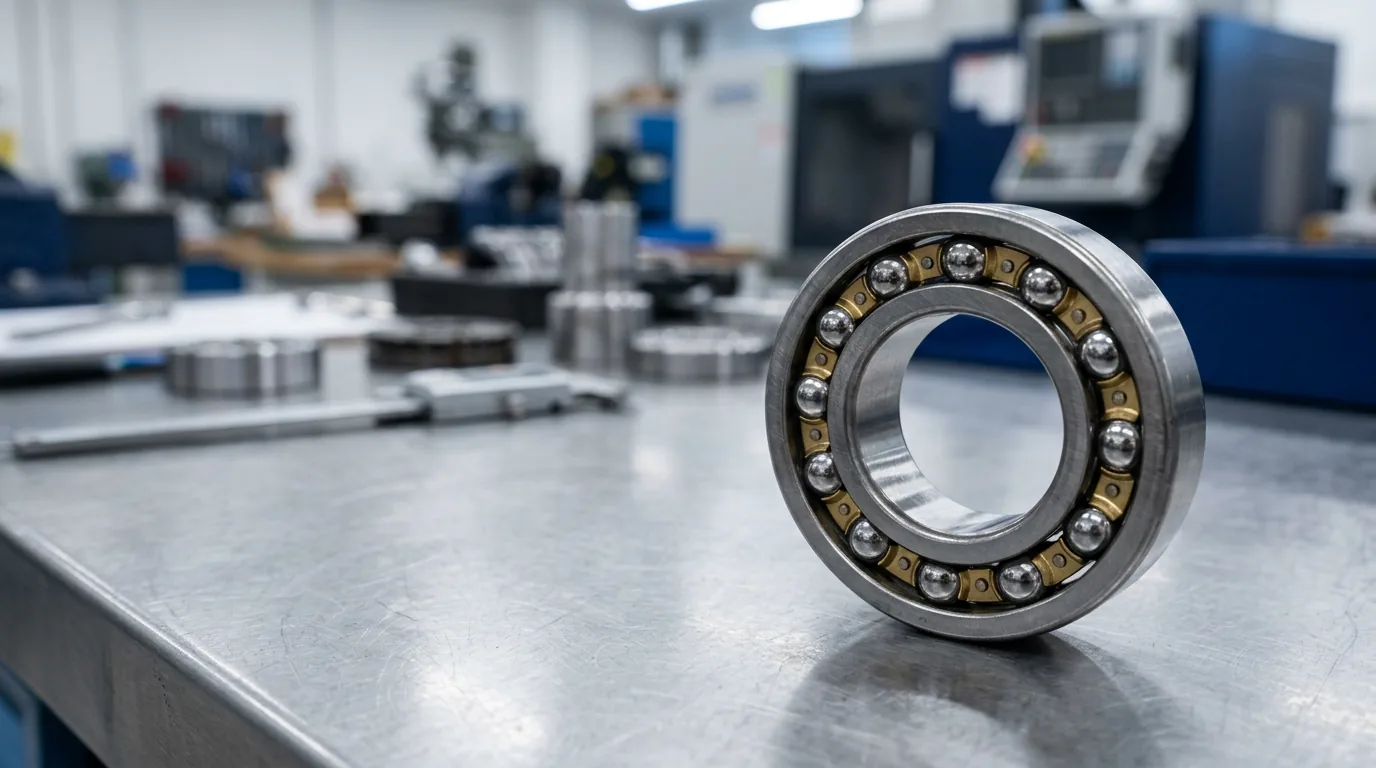
A self-aligning ball bearing is an industrial component featuring two rows of balls and a spherical outer raceway, designed to tolerate shaft deflection and angular misalignment. Unlike standard rigid bearings, this geometry allows the inner ring and shaft to tilt freely within the housing without increasing friction. Plant engineers use these components in applications where mounting errors, structural flexing, or long shafts make perfect alignment impossible.
At HI-TEC ASIA, we know forcing a rigid bearing into a misaligned application is a false economy leading to rapid wear and machine downtime. Our HI-TEC and premium HI-TEC SILVER self-aligning ball bearings keep industrial machinery running quietly and reliably. This guide explains the precise design differences, load capacities, and primary industrial applications that rely on self-aligning technology.
What is the difference between a self-aligning bearing and a deep groove bearing?
Unlike standard deep groove variants, 1200 and 2200 series self-aligning ball bearings prioritize high misalignment tolerance over heavy load capacity. A self-aligning ball bearing utilizes a common spherical outer raceway that allows the inner ring to pivot. In contrast, a standard deep groove ball bearing features deep raceways designed for high radial loads and rigidity, making it highly sensitive to shaft deflection.
When plant engineers evaluate these components, the primary difference lies in angular misalignment limits. Standard deep groove variants, such as the 6200 series, typically permit only 0.03 to 0.17 degrees of angular misalignment before experiencing excessive stress[1][2]. For standard service life, alignment must generally be kept within 0.05 to 0.1 degrees[3]. Forcing a deep groove bearing beyond these limits drastically reduces its lifespan.
Conversely, 1200 and 2200 series self-aligning ball bearings accommodate approximately 2.5 to 3 degrees of angular misalignment under normal conditions[4][5]. This represents roughly one to two orders of magnitude more tolerance.
| Feature | Self-Aligning Ball Bearing (e.g., 1202 series) | Deep Groove Ball Bearing (e.g., 6200 series) |
|---|---|---|
| Primary Focus | High misalignment tolerance | High rigidity and load capacity |
| Internal Geometry | Two rows of balls, spherical outer raceway | Single row of balls, deep raceways |
| Misalignment Limit | Approximately 2.5 to 3 degrees[4][5] | 0.03 to 0.17 degrees permissible[1][2] |
| Shaft Deflection | Inner ring tilts without adding stress | Rapidly increases friction and wear |
Choosing between the two depends on the operating environment. Select a deep groove component when housings are machined accurately and shafts remain rigid. If equipment features long shafts that bend under load, a self-aligning bearing prevents catastrophic failure.
What are the primary self-aligning ball bearing applications?
Plant engineers typically use HI-TEC self-aligning ball bearings in agricultural equipment, textile machinery, and conveyors where shaft bending or mounting errors are common. Installing HI-TEC SILVER self-aligning bearings prevents premature machinery failure caused by shaft deflection, significantly reducing costly downtime in heavy industrial applications.
Because these bearings accommodate dynamic misalignment and structural flexing, they are critical across several demanding sectors in Indonesia. The primary applications include:
-
Agricultural Equipment and Tractors High torque transmission through long shafts over uneven terrain produces severe bending and angular misalignment[6][7]. Self-aligning ball bearings are deployed in tractor power-take-off (PTO) drive systems, combine harvesters, and grain augers[6][8]. In these systems, long shafts sag under distributed material loads, meaning bearing seats rarely remain perfectly aligned during operation[8][9].
-
Textile Manufacturing Machinery Textile mills rely on high-speed rotation of long, slender guide rollers and ring frame shafts that bend under radial loads[4][10]. Continuous operation and heat also change the geometry of machine frames, introducing mounting misalignment[4][11]. Self-aligning ball bearings are ideally suited for these fabric processing rollers because they maintain smooth operation despite dynamic misalignment[4][12].
-
Industrial Conveyor Systems Belt conveyors used in mining and agriculture utilize long drive pulley shafts loaded heavily by belt tension[13][14]. This tension causes the pulley shafts to bend, creating angular misalignment between the bearing housings mounted on either side[13][8]. By utilizing self-aligning bearings on conveyor pulleys, maintenance teams accommodate this inherent shaft deflection and prevent rapid component wear[15][12].
Frequently Asked Questions
What is a self-aligning ball bearing used for?
A self-aligning ball bearing is used in industrial machinery where shaft deflection, structural flexing, or mounting errors make perfect alignment impossible. They are heavily utilized in agricultural grain augers, textile spinning frames, and long conveyor pulley shafts to maintain smooth rotation despite dynamic misalignment.
How does a self-aligning ball bearing work?
It works by utilizing two rows of balls that roll on a common spherical outer raceway. This unique internal geometry allows the inner ring, balls, and cage assembly to pivot freely within the outer ring, accommodating shaft tilt without increasing friction or stress.
What is the difference between a self-aligning bearing and a deep groove bearing?
The primary difference is misalignment tolerance versus load capacity. A self-aligning bearing can handle roughly 2.5 to 3 degrees of angular misalignment[4][5]. A deep groove bearing handles heavier loads but fails rapidly if misalignment exceeds 0.17 degrees[2].
Which bearing should I use for shaft misalignment?
You should use a self-aligning ball bearing or a spherical roller bearing for severe shaft misalignment. If your application involves light to medium radial loads and high speeds, the self-aligning ball bearing is the optimal choice to prevent premature wear.
References
- SKF single row deep groove ball bearings misalignment. https://www.nodeshk.com/skf/art/sr-dgb-misalignment.html (2025-05-12)
- Bearing Internal clearance and misalignment - Eng-Tips. https://www.eng-tips.com/threads/bearing-internal-clearance-and-misalignment.117290/ (2005-03-03)
- A comprehensive guide to bearing misalignment | NYZ. https://nyzbearing.com/a-comprehensive-guide-to-bearing-misalignment/ (2025-06-12)
- Self-Aligning Ball Bearings: Exploring Applications and Recent .... https://pibsales.com/bearings/self-aligning-ball-bearings-exploring-applications-and-recent-innovations/ (2025-10-03)
- Self-Aligning Ball Bearings: Uses & Misalignment - TFL Bearing. https://tflbearing.com/blog/faq/when-to-use-self-aligning-ball-bearings.html (2021-07-31)
- Drive shafts for tractors and agricultural machinery - Elbe Group. https://www.elbe-group.de/en/drive-shafts/tractor/ (2025-07-15)
- Agriculture & Forestry - CentroMotion. https://www.centromotion.com/markets-served/agriculture-forestry/ (2025-09-16)
- Agriculture Solutions | Bearings & Drive Products for Agri Equipment. https://www.solveindustrial.com/industries/agriculture (2026-06-20)
- Agricultural Machinery - Schaeffler medias. https://medias.schaeffler.us/en/offroad/agriculture (2026-06-09)
- The Essential Role of Bearings in Textile Machinery: Precision .... https://www.bdsbearing.com/blog/the-essential-role-of-bearings-in-textile-machinery-precision-efficiency-and-innovation (2024-02-28)
- Bearings for tough conditions in textile manufacturing - Design World. https://www.bearingtips.com/bearings-for-tough-conditions-in-textile-manufacturing/ (2019-09-09)
- Self-Aligning Bearings Overview | Tameson.com. https://tameson.com/pages/bearing-self-aligning (2022-04-08)
- The Types of Conveyor Roller Bearings. https://www.rolconrollers.com/blog/the-types-of-conveyor-roller-bearings/ (2024-10-11)
- Clearly Conveying Episode 8: Bearing Life - YouTube. https://www.youtube.com/watch?v=hLsV3Cr_oO4 (2024-02-20)
- What are conveyor roller bearings and how do they work? | NYZ. https://nyzbearing.com/what-are-conveyor-roller-bearings-and-how-do-they-work/ (2025-02-24)