

Signs of Industrial Bearing Failure: 2026 Replacement Guide
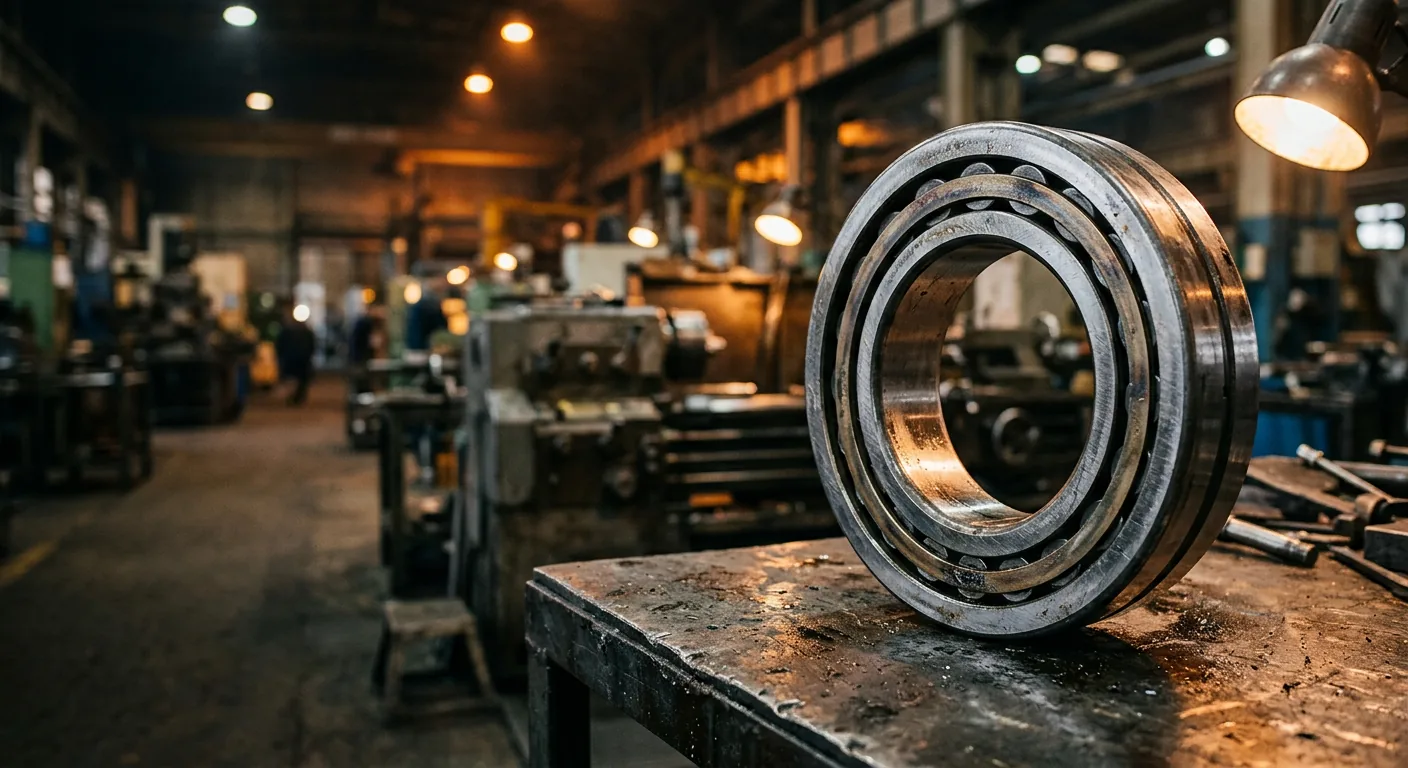
The top three signs an industrial bearing needs immediate replacement are abnormal grinding noises, excessive machine vibration, and operating temperatures exceeding standard equipment baselines. For plant engineers and workshop mechanics across Indonesia - from manufacturing lines in Jakarta to heavy mining sites in Balikpapan - recognizing these bearing failure symptoms early is critical to preventing catastrophic machine failure. Ignoring early warning signs or installing cheap counterfeit bearings increases the risk of catastrophic downtime, making premium upgrades like HI-TEC SILVER bearings a cost-effective choice.
When a bearing begins to fail, the symptoms escalate predictably. What starts as a subtle high-pitched squeal due to lubrication breakdown quickly evolves into deep grinding and elevated heat as the internal components destroy themselves. The false economy of ignoring these signs or replacing worn components with low-quality alternatives inevitably leads to severe machine downtime, ruined shafts, and compromised safety. By proactively monitoring for these specific signs of industrial bearing failure, technicians can schedule maintenance before the equipment forces an unplanned shutdown, ensuring quiet, low-maintenance, and reliable operation.
What are the first signs of industrial bearing failure?
The top three signs an industrial bearing needs immediate replacement are abnormal grinding noises, excessive machine vibration, and operating temperatures exceeding standard equipment baselines. Understanding these primary indicators allows maintenance teams to act before a minor issue becomes a major operational crisis.
First, any deviation from a bearing's standard low, steady hum warrants immediate investigation. New or changing sounds, such as squealing or roaring, are among the earliest indicators of internal distress[1][2]. Second, excessive machine vibration serves as a highly measurable indicator of bearing problems. Less than 10% of bearings reach their full design life, with approximately 40% of failures caused by improper lubrication and 30% by misalignment, both of which manifest early as abnormal vibration[3]. Prolonged vibration accelerates fatigue and leads to component destruction, requiring more frequent maintenance and causing unplanned downtime and reduced productivity[4][5].
Finally, operating temperatures exceeding baselines represent a critical warning. For many industrial bearings, an acceptable operating temperature is 82°C (180°F) or lower[1]. When temperatures cross 121°C (250°F), bearing metals may discolor and experience severe structural weakening[2][6]. Heat is often the final symptom before catastrophic failure, driven by internal friction and lubrication breakdown[2].
When these signs appear, it is crucial to know when to replace industrial bearings. Ignoring these symptoms or relying on cheap replacement parts guarantees a shorter service life and higher total costs. Upgrading to high-quality HI-TEC SILVER bearings ensures you are installing components with premium materials designed for a longer service life, effectively reducing the frequency of future failures and keeping your machinery running smoothly.
Why is my industrial bearing making a grinding or squealing noise?
Specific noises indicate distinct failures; high-pitched squealing often points to lubrication issues, while deep grinding signals severe raceway damage that compromises the 52100 chrome steel structure. Accurately performing bearing noise diagnosis helps technicians pinpoint the exact causes of bearing failure.
High-pitched squealing or squeaking frequently indicates insufficient lubrication or excessive friction at high speeds[2][7]. When the elastohydrodynamic lubricant film collapses, metal-to-metal contact increases, leading to rapid surface distress[8]. Conversely, a low-frequency growl or deep grinding that tracks rotational speed is strongly associated with heavily damaged bearings and advanced raceway spalling[9].
When structural damage is detected through deep grinding, the bearing must be replaced immediately to prevent catastrophic machine failure. Most high-precision industrial bearings rely on AISI 52100 chrome steel, which is engineered to achieve a hardness of 60 to 67 HRC[10]. However, thermal abuse or poor lubrication can cause severe structural compromise. Over-tempering or extreme friction can form a brittle white layer on the steel, replacing beneficial compressive residual stresses with tensile stresses[11][12]. These tensile stresses significantly reduce fatigue life and promote surface cracking and operational noise[11][12].
| Noise Type | Primary Cause | Physical Bearing Damage | Required Action |
|---|---|---|---|
| High-pitched squealing | Insufficient lubrication | Film collapse; metal-to-metal contact[8] | Check lubrication; inspect for early wear |
| Deep grinding or growling | Severe raceway damage | Spalling; 52100 chrome steel structural compromise[11][9] | Replace bearing immediately |
| Rhythmic knocking | Looseness or misalignment | Brinelling; out-of-round journals[7] | Check shaft alignment and housing fit |
| Harsh crunching | Contamination | Dents and micro-pits from hard particles[8] | Clean housing; replace bearing and seals |
By recognizing these acoustic signatures, mechanics can accurately diagnose the root cause of the problem and replace the compromised unit with reliable HI-TEC components.
Frequently Asked Questions
What are the first signs of bearing failure?
The earliest signs include abnormal noises like squealing or grinding, a sudden increase in machine vibration, and operating temperatures rising above the standard 82°C (180°F) baseline[1]. Monitoring these three factors allows technicians to catch wear before it causes catastrophic equipment downtime.
Why is my industrial bearing making a grinding noise?
A deep grinding noise indicates severe raceway damage, such as spalling or structural compromise of the bearing's steel[9]. This occurs when subsurface fatigue cracks reach the surface, causing metal fragments to break away and disrupt the smooth rotation of the rolling elements[11].
How hot should an industrial bearing get before it fails?
Most lubricated industrial bearings should operate below 82°C (180°F)[1]. Temperatures exceeding 121°C (250°F) indicate severe friction and lubrication breakdown, leading to metal discoloration, structural weakening, and imminent catastrophic failure[2][6].
When should I replace a noisy machine bearing?
You should replace a noisy bearing immediately if it produces a deep grinding or crunching sound, as this indicates irreversible structural damage. For high-pitched squealing, check the lubrication first; if the noise persists after proper greasing, the internal geometry is already compromised and requires replacement.
References
- Bearing Failure Symptoms | Tameson.com. https://tameson.com/pages/bearing-failure-symptoms (2023-06-28)
- Five Common Signs of Impending Bearing Failure. https://gesrepair.com/five-common-signs-of-impending-bearing-failure/ (2021-11-25)
- Vibration in Machinery: Causes and Solutions - Alphatec Engineering. https://alphatec-engineering.com/vibration-in-machinery/ (2025-07-25)
- The Causes of Machine Vibration and the Solutions | AV Industrial. https://www.avindustrialproducts.co.uk/blog/the-causes-of-machine-vibration-and-the-solutions (2026-04-07)
- Machine Vibration Causes and Fixes - GMT Rubber. https://www.gmtrubber.com/machine-vibration-causes-and-fixes/ (2023-04-06)
- Common Bearing Failures and How to Fix Them: Heat, Vibration .... https://onlinebearingstore.com/blog/common-bearing-failures-and-how-to-fix-them-heat-vibration-noise-and-more (2025-10-29)
- What a New Noise From a Bearing Usually Means - Fusion Babbitting. https://fusionbabbitting.com/bearing-noise-causes-what-it-means-signs-checks/ (2026-01-21)
- Steels for bearings - ScienceDirect.com. https://www.sciencedirect.com/science/article/abs/pii/S0079642511000922 (2024-08-05)
- Isolating Wheel Bearing Noise (VIDEO) - Shop Owner Magazine. https://www.shopownermag.com/isolating-wheel-bearing-noise-video/ (2023-08-02)
- 52100 Steel: Uses, Composition, Properties - Xometry. https://www.xometry.com/resources/materials/52100-alloy-steel/ (2023-07-07)
- 52100 Steel: Properties, Heat Treatment & Selection Guide. https://www.rapid-protos.com/52100-steel/ (2026-04-05)
- Investigation of Surface Integrity Induced by Various Finishing ... - PMC. https://pmc.ncbi.nlm.nih.gov/articles/PMC9144910/ (2022-05-22)