

Shielded vs Sealed Bearings: 2026 Industrial Guide
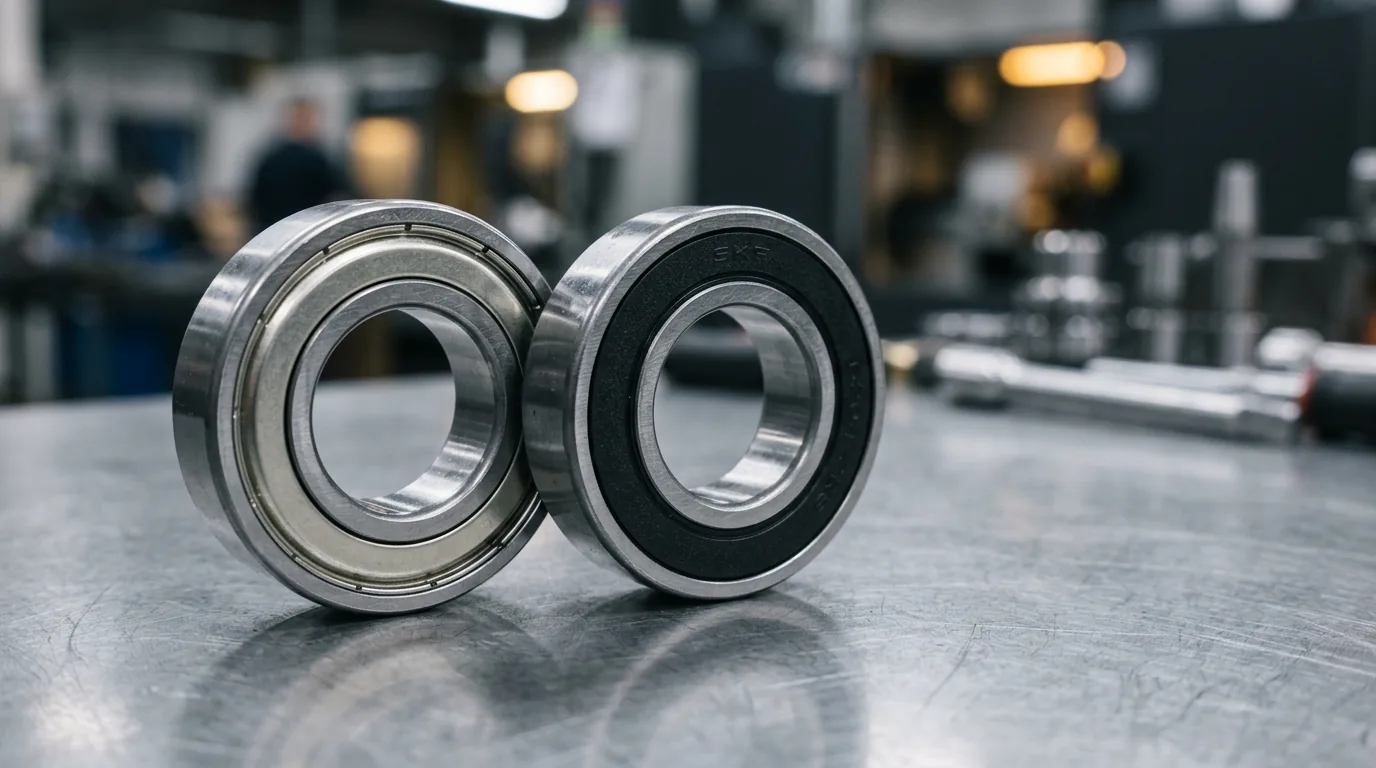
Metal shields protect against large debris while allowing higher speeds, whereas rubber seals block fine dust and moisture but generate more friction. Understanding the difference between shielded vs sealed bearings is essential for plant engineers and maintenance technicians tasked with keeping industrial machinery running smoothly.
Every time a machine stops due to a failed bearing, the true cost is measured in lost production, not just the replacement part. Relying on cheap, improperly specified bearings is a false economy that guarantees premature wear. To ensure quiet, reliable operation, you must match the bearing's enclosure to its operating environment. A high-speed motor in a clean facility requires different protection than a conveyor operating in a dusty site.
By analyzing friction levels, speed limits, and contamination resistance, this guide helps you select the exact right component from HI-TEC ASIA. Whether you require our standard HI-TEC line or the premium longevity of HI-TEC SILVER, choosing the correct enclosure prevents downtime and maximizes service life.
What is the difference between shielded and sealed bearings?
Shielded bearings (ZZ) use metal plates for high speeds and large debris, whereas sealed bearings (2RS) use rubber to block fine dust and moisture but generate more friction[1][2][3][4]. Choosing between them requires balancing rotational speed against environmental contamination.
A shielded bearing features two metal plates fixed to the outer ring, leaving a small non-contact gap near the inner ring[3][4]. Because the shield does not physically touch the moving parts, it adds virtually no friction[5][3]. Metal shielded bearings, marked with the ZZ suffix, are ideal for clean manufacturing floors because they operate with lower friction and allow higher rotational speeds[1][5][2].
Conversely, a sealed bearing uses rubber contact seals that physically rub against the inner ring[1][3][6]. This continuous contact creates a tight barrier that keeps lubrication inside and contaminants outside, but it increases running friction and heat[1][3][6]. Consequently, 2RS bearings typically have 20-40% lower maximum rotational speeds than ZZ versions of the exact same size[7][2][8]. For instance, a standard 6200 2RS bearing might limit at 18,000 rpm, while the 6200 ZZ equivalent reaches 24,000 rpm[2].
| Feature | Shielded Bearings (ZZ) | Sealed Bearings (2RS) |
|---|---|---|
| Enclosure | Metal plates | Rubber or elastomer |
| Contact | Non-contact gap[3][4] | Direct lip contact[1][6] |
| Friction | Minimal[5][9] | Higher drag / Heat[1][6] |
| Max RPM | High (Baseline)[8] | 20-40% lower than ZZ[7][2][8] |
| Protection | Blocks large debris[5][2] | Blocks fine dust[1][4] |
Understanding these mechanical differences helps engineers specify the correct component. Whether replacing a standard 6205 or a heavy-duty deep groove ball bearing, matching the enclosure to the application is the first step in extending service life.
Which bearing protection is best for dusty industrial environments?
Rubber sealed bearings, designated by the 2RS suffix, offer superior protection against fine contamination in harsh environments like mining but have lower maximum RPM limits[1][2][8]. Selecting the correct bearing protection from HI-TEC ASIA prevents premature equipment failure, reducing costly machine downtime in industrial plants across locations like Bekasi.
When evaluating bearing protection, engineers must assess specific environmental hazards. Relying on the wrong enclosure is a false economy - saving money on an incorrectly specified bearing inevitably leads to premature wear and expensive operational halts.
Criteria for Choosing Shielded (ZZ) Bearings * Operating Environment: Clean, dry spaces, such as indoor manufacturing floors in Jakarta. * Speed Requirements: High-speed applications like electric motors and precision spindles where heat buildup must be minimized[1][5][10]. * Contamination Level: Low. Metal shields block larger chips but cannot stop fine airborne dust from penetrating the non-contact gap[3][4][6].
Criteria for Choosing Sealed (2RS) Bearings * Operating Environment: Harsh, heavily contaminated settings, including mining operations or agricultural processing plants. * Speed Requirements: Low to moderate speeds where a 20-40% reduction in maximum RPM will not throttle performance[7][2][8]. * Contamination Level: High. The rubber contact lip forms a physical barrier providing excellent protection against fine dust and direct moisture[1][5][4].
If machinery operates in a dusty environment, fine particulates will quickly bypass a metal shield, contaminate the grease, and destroy the rolling elements. In these scenarios, a 2RS bearing is mandatory. Recognizing the signs of industrial bearing failure allows you to upgrade to the appropriate HI-TEC or HI-TEC SILVER bearing, ensuring quiet, reliable operation.
Frequently Asked Questions
What is the difference between shielded and sealed bearings?
Shielded bearings use metal plates with a non-contact gap to block large debris while allowing high-speed, low-friction operation. Sealed bearings use a rubber lip that physically contacts the inner ring, creating higher friction but offering excellent protection against fine dust and moisture[1][2][3][4].
What do the 2RS and ZZ bearing codes mean?
The ZZ suffix indicates a bearing is equipped with metal shields on both sides. The 2RS suffix means the bearing features rubber contact seals on both sides to lock in lubrication and keep out environmental contaminants.
Which bearing type is best for dusty industrial environments?
Rubber sealed bearings (2RS) are the best choice for dusty environments. Their contact seals create a tight physical barrier that prevents fine dust, dirt, and moisture from contaminating the internal grease and destroying the bearing[1][5][4].
Do sealed bearings have a lower speed limit than shielded bearings?
Yes. Because the rubber seal physically rubs against the inner ring, it generates more friction and heat[1][3][6]. Consequently, 2RS bearings typically have maximum rotational speeds that are 20-40% lower than ZZ shielded bearings of the exact same size[7][2][8].
References
- 2RS Bearings vs. ZZ Bearings: Which is Better for Your Application?. https://www.nsarbearings.com/2rs-bearings-vs-zz-bearings-which-is-better-for-your-application/ (2026-06-23)
- 6200 2RS vs 6200 ZZ: Key Differences and Applications. https://btonbearings.com/6200-2rs-vs-6200-zz-whats-the-difference/ (2026-03-11)
- Sealed, Open and Shielded Bearings comparison - Pibsales. https://pibsales.com/bearings/sealed-open-and-shielded-bearings-comparison/ (2025-07-07)
- How to Choose Bearing ZZ, 2RS, Open, and C3? Complete Guide to .... https://iskbearing.com/news/knowledge/bearing-zz-2rs-open-c3-selection-guide (2026-06-26)
- Comparing Open, ZZ, and 2RS Bearings: Which One Should You .... https://blog.pgnbearings.com/comparing-open-zz-and-2rs-bearings/ (2024-12-19)
- Which Bearing Closures Are Best? - Bearing Centre. https://www.bearingcentre.net/blog/which-bearing-closures-are-best (2019-02-24)
- Open vs ZZ vs 2RS Deep Groove Ball Bearings Explained. https://www.nbyfbearing.com/news/industry-news/open-vs-zz-vs-2rs-deep-groove-ball-bearings-explained.html
- Ball bearing speed limitation guide - SMB Bearings. https://www.smbbearings.com/technical/maximum-bearing-speed.html (2005-01-01)
- RC Vehicle Bearing Types: Which Are Right for Your Application?. https://naughtyboyrc.com/blogs/news/rc-vehicle-bearing-types-which-are-right-for-your-application (2026-04-05)
- Sealed vs Shielded Bearings: Which One Does Your Application .... https://mapleace.com/blog/sealed-vs-shielded-bearings-what-is-the-difference-and-which-one-does-your-application-need (2026-06-01)