

How to Read Bearing Part Numbers: Complete 2026 Guide
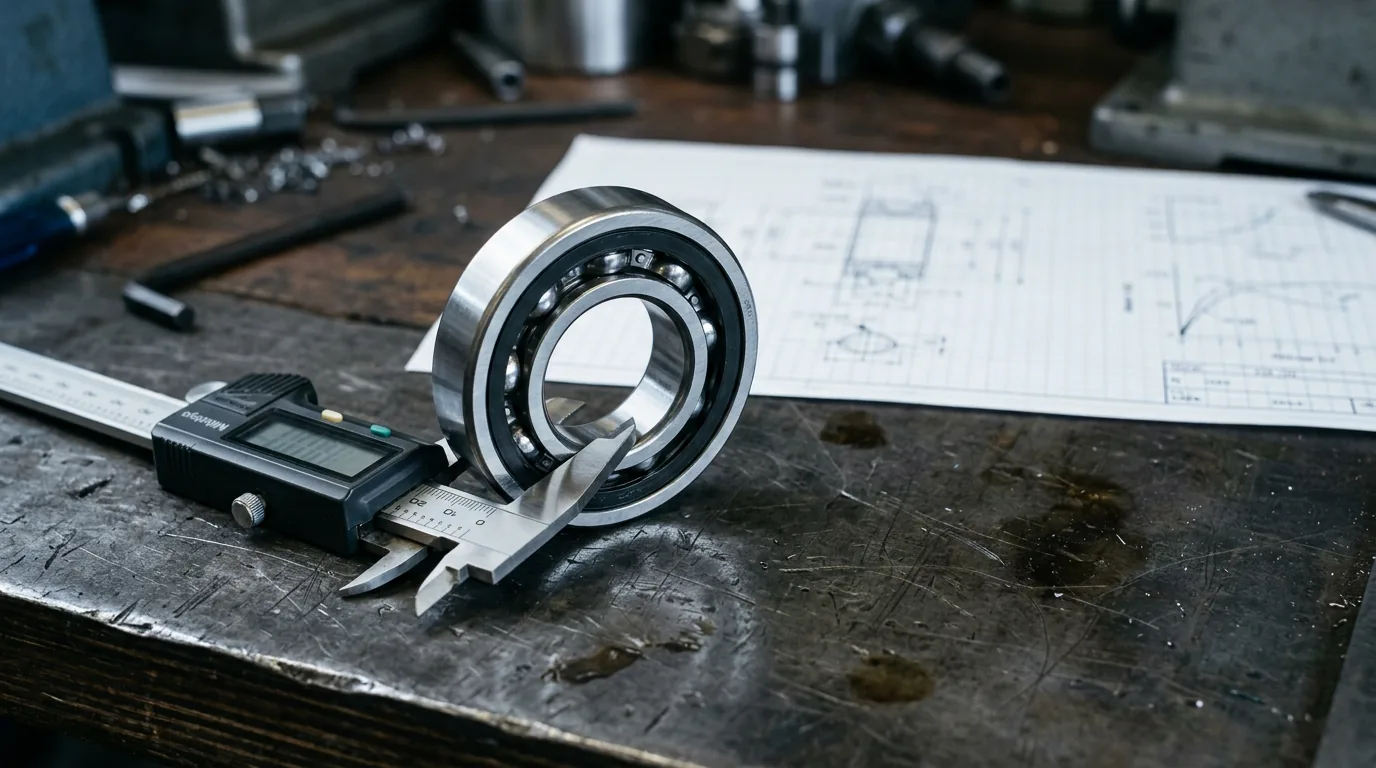
A standard bearing part number is an alphanumeric code that identifies the bearing's type, series, bore size, and specific design features like seals or internal clearance. For maintenance technicians and procurement staff across Indonesia, knowing how to read bearing part numbers is essential for preventing costly machine downtime. Whether replacing a worn component in a Jakarta manufacturing plant or ordering spares for a heavy-duty workshop in Surabaya, decoding standard bearing codes ensures you get the exact match.
Understanding bearing suffixes meaning and mastering the bearing bore size calculation allows you to confidently navigate the HI-TEC ASIA catalogue. This guide details the standard bearing part number breakdown, explaining the math behind the bore size and exactly what common suffixes like 2RS and ZZ mean, so you can order the right HI-TEC or HI-TEC SILVER replacement bearing every time.
How do you read a bearing part number and calculate bore size?
A standard bearing part number is an alphanumeric code that identifies the bearing's type, series, bore size, and specific design features like seals or internal clearance. The ISO metric bearing basic designation is generally read as a prefix, a basic number that includes the bearing type and dimension series, and a final two-digit bore code[1][2].
To perform a bearing bore size calculation on standard metric rolling bearings, you look at the last two digits of the standard bearing codes. The standard rule is simple: for standard bearings with a bore code of 04 or higher, multiply the last two digits by five to calculate the exact bore size in millimeters[2][3]. For example, a bearing code ending in 04 means a 20 mm bore size[4][5]. A code ending in 12 indicates a 60 mm bore[2][6].
However, there are four fixed exceptions for the smallest standard sizes. If the standard bearing codes end in 00, the bore is 10 mm. A code of 01 means 12 mm, 02 means 15 mm, and 03 means 17 mm[1][4]. This fundamental bearing part number breakdown applies across the industry and is critical when ordering a reliable replacement part.
When a technician in a Cikarang factory removes a failed bearing, reading these digits correctly prevents ordering the wrong size, avoiding severe machine downtime. By applying this simple bearing bore size calculation, procurement officers can confidently search the HI-TEC ASIA replacement bearing catalog of over 2,000 items. Whether you need a standard HI-TEC deep groove ball bearing or a premium HI-TEC SILVER component, decoding the core numbers guarantees a precise physical fit.
What do common bearing suffixes like 2RS, ZZ, and C3 mean?
Common bearing suffixes indicate shielding and clearance, such as 2RS for two rubber seals, ZZ for two metal shields, and C3 for greater internal radial clearance[7][8]. While the main numbers dictate the physical dimensions, the bearing suffixes meaning tells you how the bearing is protected from contamination and how much internal play it has before installation[7][9].
Understanding the 2RS and ZZ bearing meaning is crucial for matching the bearing to its working environment. The suffix 2RS means a bearing has rubber seals on both sides, providing the strongest protection against dust and moisture, though they create slightly more friction[7][10]. The suffix ZZ (or 2Z) means metal shields on both sides, which block larger contaminants while keeping friction low, making them ideal for high-speed applications[7][9].
Another vital suffix is C3. Unlike seals or shields, C3 is a clearance class indicating internal radial clearance greater than normal[8][3]. This extra clearance is necessary when high operating heat or tight press fits might reduce the running clearance in service, preventing premature bearing failure[11][12].
| Suffix | Feature Indicated | Application Context |
|---|---|---|
| 2RS | Two rubber seals | High contamination environments; prevents moisture and dust entry[7]. |
| ZZ / 2Z | Two metal shields | High-speed operations needing low friction and moderate protection[9]. |
| C3 | Greater internal clearance | High-temperature operations or tight interference fits[8]. |
Understanding standard bearing codes allows buyers to accurately match specifications when ordering replacement parts from the HI-TEC ASIA catalogue of over 2,000 items. Selecting the correct HI-TEC SILVER bearing with the right suffix ensures quiet, low-maintenance, and reliable operation. For more details on matching these features, review our premium HI-TEC SILVER specifications to find the perfect fit.
Frequently Asked Questions
How do you read a bearing part number?
A standard bearing part number is read by breaking the alphanumeric code into its base components. The first digits indicate the bearing type and series, while the last two digits represent the bore code. Suffixes at the end specify design features like seals and internal clearance.
What do the suffixes 2RS and ZZ mean on a bearing?
The suffix 2RS indicates that the bearing features two rubber contact seals, which provide excellent protection against moisture and heavy dust[7]. The suffix ZZ indicates two non-contact metal shields, which offer moderate protection while allowing for higher rotational speeds and lower friction[10].
How do I calculate the bore size of a bearing from its number?
For standard metric bearings ending in 04 or higher, multiply the last two digits by five to get the bore size in millimeters - for example, an 04 code equals 20 mm[3]. The fixed exceptions are 00 (10 mm), 01 (12 mm), 02 (15 mm), and 03 (17 mm)[1].
What should I do if the bearing part number is illegible?
If the bearing part number is worn off or illegible, you must physically measure the bearing's inner diameter, outer diameter, and width using a digital caliper. You can then use these exact dimensions to find the correct replacement in the HI-TEC ASIA replacement bearing catalog.
References
- Bearing part numbers | Tameson.com. https://tameson.com/pages/bearing-part-numbers (2022-02-25)
- Ball Bearing Measurement, Bearing Sizes & Bearing Codes | RS. https://uk.rs-online.com/web/content/discovery/ideas-and-advice/how-to-measure-a-ball-bearing (2023-10-13)
- Bearing number | Basic Bearing Knowledge - ジェイテクト. https://koyo.jtekt.co.jp/en/support/bearing-knowledge/6-3000.html (2026-07-04)
- [PDF] NUMBERING SYSTEM QUICK REFERENCE GUIDE - NTN Canada. https://ntn.ca/wp-content/uploads/2019/10/BearingQuickReferenceGuide-EN-Web.pdf (2024-02-27)
- [PDF] Numbering System Quick Reference Guide - NTN Americas. https://ntnamericas.com/wp-content/uploads/2025/12/UPDATED-NTN-Catalog-Gen-NomenclatureQRG-A-22NTNQREF.pdf (2026-01-05)
- Bearing Number Systems: Key to Design & Maintenance Success. https://blog.pgnbearings.com/understanding-common-ball-bearing-number-designations/ (2023-06-01)
- How to Choose Bearing ZZ, 2RS, Open, and C3? Complete Guide to .... https://iskbearing.com/news/knowledge/bearing-zz-2rs-open-c3-selection-guide (2026-06-26)
- Designation system | SKF. https://www.skf.com/group/products/rolling-bearings/roller-bearings/spherical-roller-bearings/designation-system
- [PDF] BEARING DESIGNATION SYSTEMS - NSK Ltd.. https://www.nsk.com/content/dam/nsk-marketing/projects-completed/literature/service/bearing-designation-systems_bochure/en_bearing-designation-systems_bochure/preview-pdf_bearing-designation-systems_bochure_en/EN_Bearing_Designation_Systems_BD_03_2024_low-res.pdf (2026-07-08)
- What 2RS and ZZ Mean in Bearing Codes - NRB Bearings. http://www.nrbbearings.com/blog/bearing-codes-2rs-zz.html
- Designation system - SKF. https://www.skf.com/us/products/rolling-bearings/ball-bearings/deep-groove-ball-bearings/designation-system
- Bearing Clearance Chart: CN, C3, C4 & C5 Explained | TFL. https://tflbearing.com/blog/understanding-the-importance-of-bearing-clearance.html (2021-12-02)