

How to Mount and Dismount Industrial Bearings Safely (2026)
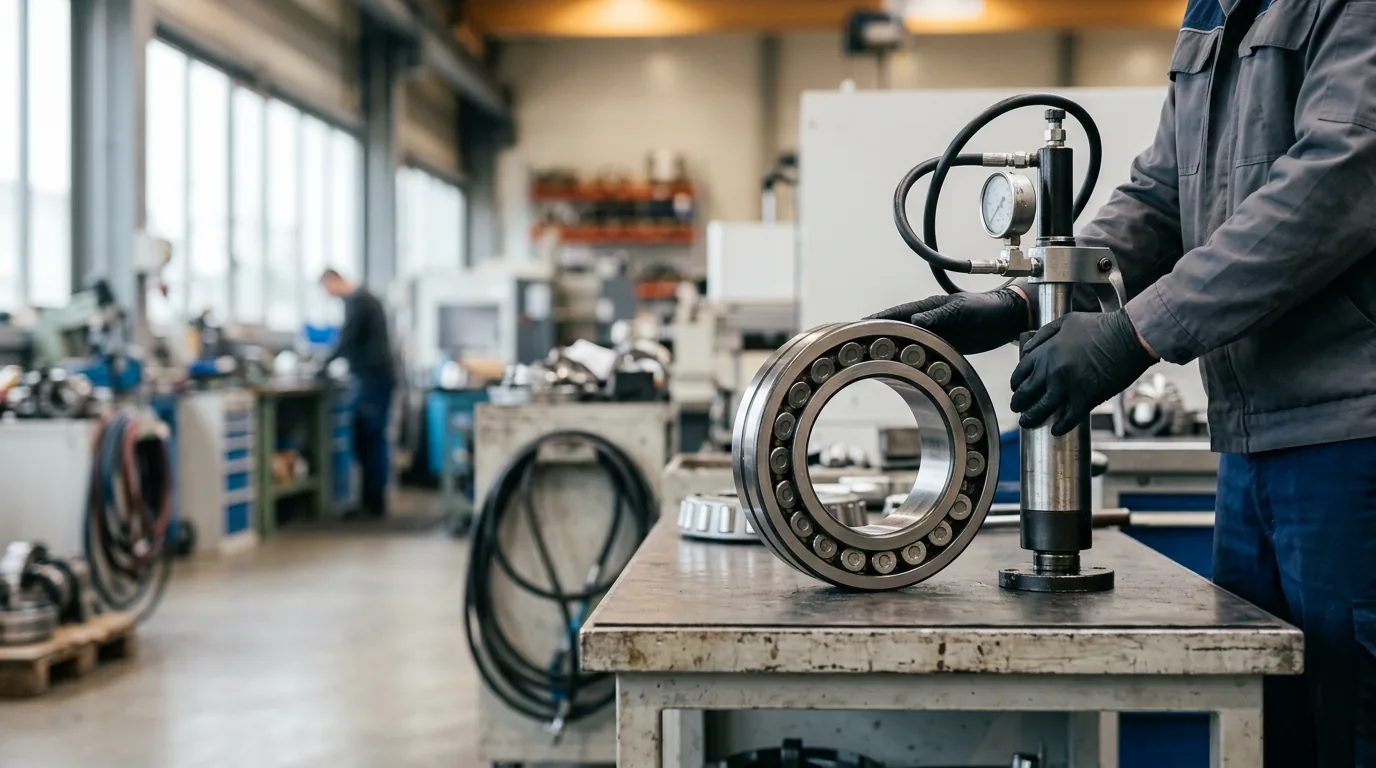
Knowing how to mount and dismount industrial bearings safely requires using controlled cold, hot, or hydraulic methods to prevent raceway damage, ensuring optimal performance for components supplied by HI-TEC ASIA. Improper installation is a leading cause of premature bearing failure and costly machine downtime across Indonesian plants. When mechanics use incorrect tools or apply direct impact force, they risk distorting the inner or outer rings.
This guide details the correct procedures for installing and removing bearings without causing damage. By following these steps, your maintenance team can extend the service life of your equipment, reduce false warranty claims, and keep your operations running smoothly.
How do I safely install an industrial bearing?
Safely mounting industrial bearings requires using controlled cold, hot, or hydraulic methods to prevent raceway damage, ensuring optimal performance for components supplied by HI-TEC ASIA. When using the hot mounting method, mechanics must heat the inner ring in a controlled manner and never exceed a maximum temperature threshold of 130 degrees Celsius. In fact, standard steel bearings should ideally not be heated above 120 degrees Celsius to avoid losing hardness and suffering metallurgical changes[1][2][3].
Choosing the right bearing installation methods depends on the size, the required fit, and the specific application.
- Cold Mounting: This method is best for small to medium bearings with an outside diameter of up to 100 mm[3]. Mechanics should use a mechanical press or a dedicated fitting sleeve to apply force exclusively to the ring that has the interference fit[3]. You must never transmit force through the rolling elements, as this causes immediate raceway indentations[4][3].
- Hot Mounting: This is the standard approach for medium and large bearings. Induction heaters are the preferred tool because they provide fast, uniform, and highly controlled heating[5][6]. For standard industrial bearings, target a heating temperature of 90 to 110 degrees Celsius[5]. While specialized high-temperature bearings withstand extreme heat, standard steel bearings must never exceed a 130 degrees Celsius threshold[2][3].
- Hydraulic Mounting: This method is ideal for large, tapered-bore bearings, such as cylindrical roller variants like the NJ 304 Bearing. This technique uses a hydraulic nut or oil injection to drive the bearing up a tapered shaft smoothly[5][3]. It significantly reduces the physical effort required and ensures highly precise axial positioning[2][3].
Always ensure the shaft and housing are thoroughly cleaned before beginning any installation procedure.
How do you remove a bearing without damaging the outer ring?
To prevent raceway damage during removal, mechanics should use specialized adapter sleeves or hydraulic pullers instead of applying direct impact force to the outer ring. Partnering with a trusted consultant like HI-TEC ASIA provides access to over 2,000 bearing variants for fast nationwide delivery across Indonesia, reducing costly plant downtime.
Removing a bearing incorrectly often leads to cocking - a situation where the bearing tilts slightly and scores the housing or the shaft[7]. Most bearing bore damage occurs when a bearing is forcefully pulled from its case at an angle[7]. To avoid this expensive mistake, maintenance teams across Indonesia must evaluate their removal methods based on the bearing size and mounting configuration.
| Removal Method | Why It Prevents Damage | Application Detail |
|---|---|---|
| Hydraulic Pullers | Eliminates shock loading | Hydraulic pullers grip the outer ring securely and apply gradual, even force to extract the bearing[8]. This prevents the micro-cracks caused by hammering[8]. |
| Withdrawal Sleeves | Reduces mechanical friction | These specialized sleeves feature dedicated oil inlets and grooves[9]. Injecting pressurized oil creates a thin fluid film that breaks static friction[9]. |
| Adapter Sleeves | Enables secure positioning | Bearing adapter sleeve installation mounts tapered-bore bearings on standard cylindrical shafts[10]. They allow easy unlocking via a locknut, avoiding heavy press forces[10]. |
| Controlled Heating | Expands housings safely | Heating a housing evenly allows the bearing to drop out without mechanical pulling[7]. Technicians must never use an uncontrolled open flame[6][7]. |
Using the correct tools ensures that both the bearing and the surrounding machinery remain intact. If your team needs expert guidance or requires high-quality replacements quickly, reach out to our team via our contact page.
Frequently Asked Questions
How do I safely install an industrial bearing?
To safely install an industrial bearing, you must choose between cold, hot, or hydraulic mounting methods based on the bearing size and fit. Use a mechanical press for small bearings, an induction heater for medium bearings, and hydraulic nuts for large bearings. Never apply direct impact force to the rolling elements.
What is the maximum temperature for heating a bearing during installation?
When using the hot mounting method, mechanics must heat the inner ring in a controlled manner and never exceed a maximum temperature threshold of 130 degrees Celsius. For standard steel bearings, the recommended target is 90 to 110 degrees Celsius, as exceeding 120 degrees Celsius can cause a loss of steel hardness[1][2].
How do you remove a bearing without damaging the outer ring?
To prevent raceway damage during removal, mechanics should use specialized adapter sleeves or hydraulic pullers instead of applying direct impact force to the outer ring. These tools apply gradual, uniform pressure that prevents the bearing from tilting and scoring the shaft or housing[8][7].
What is the correct way to use a bearing adapter sleeve?
An adapter sleeve is used to mount a tapered-bore bearing onto a standard cylindrical shaft[10]. You position the sleeve on the shaft, slide the bearing over the taper, and secure it tightly using a specialized locknut and lockwasher to achieve the correct internal clearance[10].
References
- How to Install a Bearing ? Bearing Installation Methods - isk bearings. https://iskbearing.com/news/knowledge/bearing-installation-methods (2025-09-19)
- Bearing mounting | Basic Bearing Knowledge - ジェイテクト. https://koyo.jtekt.co.jp/en/support/bearing-knowledge/15-3000.html (2026-06-26)
- [PDF] BEARING INSTALLATION AND MAINTENANCE GUIDE - SKF. https://cdn.skfmediahub.skf.com/api/public/0901d1968024f02a/pdf_preview_medium/0901d1968024f02a_pdf_preview_medium.pdf (2026-06-25)
- A Guide To Correctly Mount Your Bearings - Bearing Centre. https://www.bearingcentre.net/blog/a-guide-to-correctly-mount-your-bearings-1 (2019-06-16)
- Your Guide to Bearing Mounting- Methods & Tools - Blogs. https://blog.slsbearings.com/your-guide-to-bearing-mounting (2019-10-03)
- Mounting of rolling bearings - simatec. https://simatec.com/int/en/about-us/company/blog/mounting-of-rolling-bearings (2024-05-04)
- Tips For Removing Bearings - MicroBlue Bearings. https://www.microbluebearings.com/bearing-removal/ (2026-06-08)
- Bearing Pullers: A Comprehensive Guide to Types and Applications. https://www.nbcbearings.com/bearing-pullers-a-comprehensive-guide-to-types-and-applications/ (2025-02-28)
- [PDF] Adapter Sleeve Catalogue - Atlantic Bearing Services. https://www.atlantic-bearing.com/wp-content/uploads/2021/06/ACB_Sleeves_Cat.pdf (2025-11-03)
- Metric H Adapter Sleeve On The Timken Company. https://cad.timken.com/viewitems/ller-bearing-metric-and-inch-accessories-1/metric-h-adapter-sleeve (2025-10-01)