

How to Measure a Bearing for Replacement: 2026 Guide
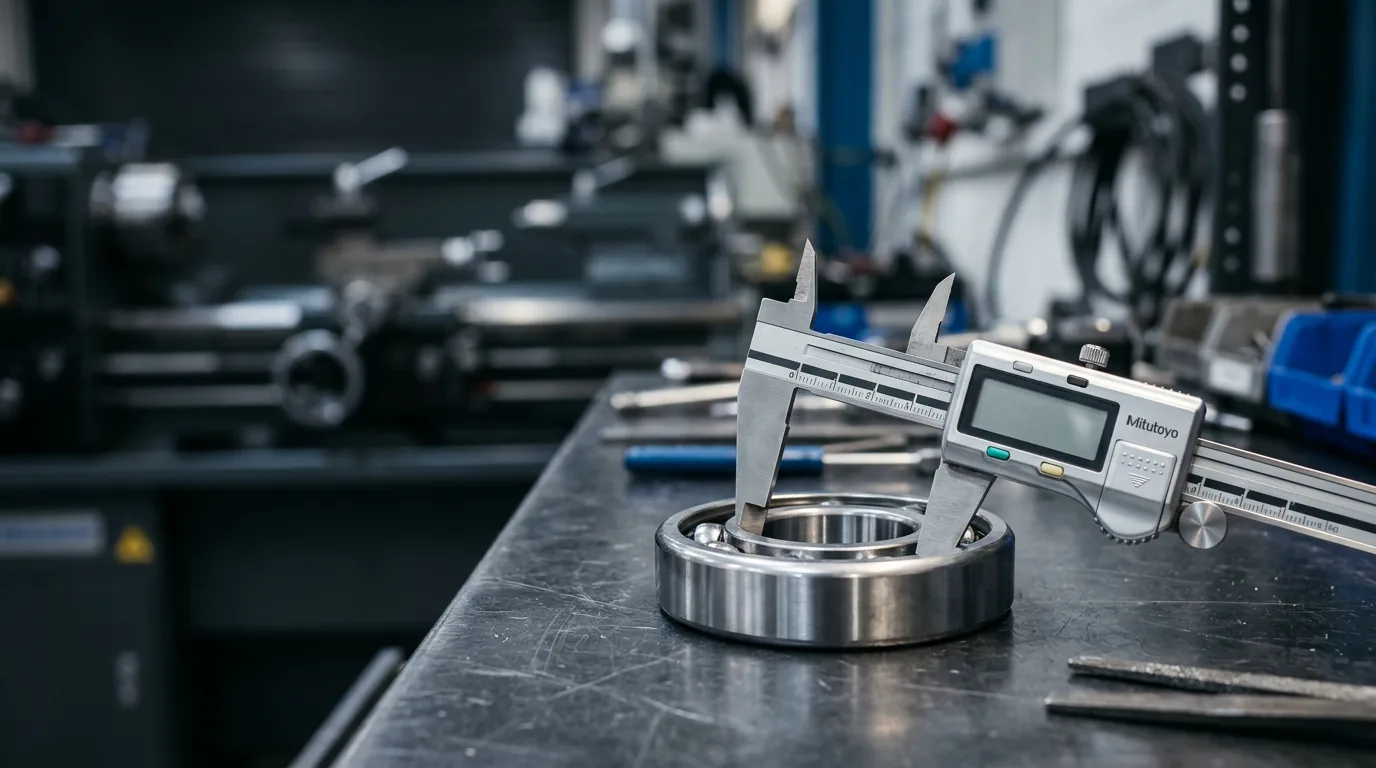
To measure a bearing for replacement, you must accurately record three critical dimensions using digital calipers: the inner diameter (bore), outer diameter, and width. Getting these measurements right ensures your machinery runs quietly and avoids unnecessary downtime. Guessing dimensions with a standard tape measure leads to incorrect orders and premature bearing failure. This guide explains how to measure a bearing, read dimensions with digital calipers, and verify your findings against standard metric sizes to browse our 2,000+ item catalog with confidence.
What are the three measurements of a bearing?
To measure a bearing for replacement, you must accurately record three critical dimensions: the inner diameter (bore), outer diameter, and width. Always use digital calipers rather than a standard tape measure for bearings, as a difference of just 1 millimeter will result in selecting the wrong replacement part.
Bearings are precision components. The inner diameter determines how the bearing fits onto the shaft, the outer diameter dictates how it sits within the bearing housing, and the width ensures proper clearance. If any dimension is off by a fraction of a millimeter, the bearing will fail to mount or suffer from severe misalignment, leading to rapid wear.
Using a tape measure is a false economy. Industrial machinery requires exact tolerances, and standard rolling-element bearings follow precise metric specifications. By investing in a quality digital caliper, technicians can confidently capture the exact dimensions required to source the correct part from the HI-TEC ASIA bearing catalog.
How do I read bearing dimensions using digital calipers?
To read bearing dimensions accurately, you must use a digital caliper to measure the inner diameter (bore) with the upper jaws, the outer diameter with the lower jaws, and the width using the flat sections of the jaws.
- Measure the inner diameter (bore): Place the caliper's upper inside-measuring jaws flat against the inside of the inner ring. Open the jaws until they sit flush against the metal raceway and record the reading.
- Measure the outer diameter: Place the caliper's large outside-measuring jaws around the widest part of the outer ring. Close the jaws firmly against the exterior surface and note the dimension.
- Measure the width: Place the caliper jaws perpendicular to the flat side faces of the outer ring. Clamp the jaws across the bearing's profile to capture the total thickness.
Combining these precise measurements with reading bearing codes guarantees you select the exact match. Always zero your digital caliper before starting.
What are the standard dimensions for 6200 series bearings?
Standard 6200 series bearings have specific metric dimensions, such as the 6205 bearing which measures exactly 25 millimeters in inner diameter, 52 millimeters outer, and 15 millimeters wide[1]. Cross-referencing your physical measurements with standard series tables ensures you order the correct replacement part.
The 6200 series represents light-duty deep groove ball bearings, widely used in electric motors and automotive applications. Because these dimensions are standardized globally, a digital caliper reading will directly match established catalog sizes.
| Bearing Series Code | Inner Diameter (Bore) | Outer Diameter | Width |
|---|---|---|---|
| 6200 | 10 mm | 30 mm | 9 mm |
| 6204 | 20 mm | 47 mm | 14 mm |
| 6205 | 25 mm[1] | 52 mm[1] | 15 mm[1] |
| 6206 | 30 mm[2] | 62 mm[2] | 16 mm[2] |
If your measurements read 25 millimeters for the bore, 62 millimeters for the outer diameter, and 17 millimeters for the width, you are actually measuring a 6305 bearing[3]. Verifying your numbers against standard tables prevents costly errors when ordering a 6200 series bearing for your machinery.
How do I measure a broken or heavily worn bearing?
When measuring a heavily worn or broken bearing, measure the intact housing or the shaft itself to determine the required inner and outer diameters to within 1 millimeter. Check the machinery manual or shaft diameter to confirm the exact bore size needed before ordering.
In industrial environments, a catastrophic bearing failure can shatter the inner or outer ring, making direct measurement impossible. Instead of guessing, mechanics must measure the surrounding mating components.
- Determine the bore: Use your digital calipers to measure the outer diameter of the machine's shaft where the bearing sits. This corresponds exactly to the required inner diameter.
- Determine the outer diameter: Measure the inside diameter of the bearing housing. Ensure the caliper jaws are perfectly straight to capture the true maximum width of the cavity.
- Determine the width: Measure the depth of the housing seat or the available space on the shaft.
Ordering a high-quality HI-TEC SILVER replacement based on precise shaft and housing dimensions ensures your new bearing will deliver quiet, low-maintenance reliability.
Frequently Asked Questions
How do I measure a bearing for replacement?
Use a digital caliper to capture the inner diameter (bore), the outer diameter, and the width. Always take these three measurements in millimeters, as standard industrial bearings are manufactured to precise metric tolerances.
What are the three measurements of a bearing?
The three critical measurements are the inner diameter (bore) for shaft fit, the outer diameter for housing fit, and the width for proper alignment.
How do I measure a broken or heavily worn bearing?
If a bearing is too damaged to measure directly, use your digital calipers to measure the machine shaft's outer diameter for the bore size, and the bearing housing's inside diameter for the outer dimension.
How do I read bearing dimensions using digital calipers?
Zero your digital calipers, use the smaller top jaws to measure the inside bore, the larger bottom jaws for the outside diameter, and clamp the bottom jaws across the flat sides to measure the width.
References
- 6205 - Deep Groove Ball Bearings -25x52x15mm - isk bearings. https://iskbearing.com/news/knowledge/6205-bearing-dimensions-more-about-25-x-52-x-15mm (2025-01-09)
- 6205 Deep groove ball bearing - BYWB Bearing. https://bywbbearing.com/6205-deep-groove-ball-bearing/ (2025-07-21)
- Deep groove ball bearing NSK 6205L11DDU, Outer diameter: 52 mm. https://uk.rubix.com/en/nsk-deep-groove-ball-bearing-6205-series/p-G1235016098